Motorcycle goggles are one of those pieces of riding equipment that nobody really questions.
Foam against your face. Strap around the helmet. Lens in front. Done.
That basic recipe has survived decades of motocross, enduro and desert abuse with remarkably little fundamental change. But 6D Helmets — a company already known for taking a slightly obsessive approach to helmet safety — has apparently looked at the humble off-road goggle and decided that we have all been doing it wrong.
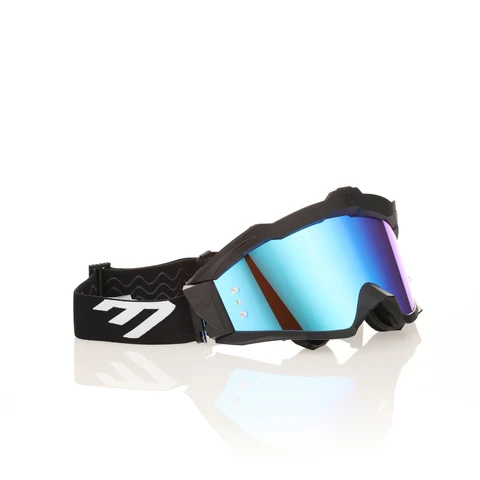
Enter the 6D MAX Goggle, and this one is considerably more interesting than simply another new lens colour and a wider strap.
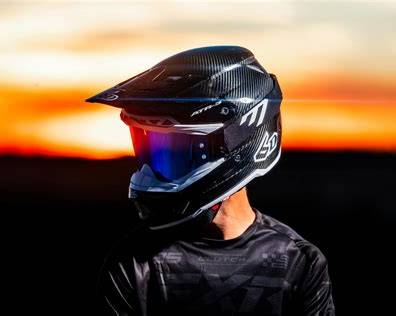
6D has effectively tried to blur the line between a conventional goggle and a helmet visor.
And for riders in the UAE and wider Middle East, where heat, sweat, sand and dust can expose the weaknesses of riding gear very quickly, some of its ideas make a surprising amount of sense.
First Up: That Lens Is Huge
The most immediately obvious feature is what 6D calls its MAXVIEW lens.
Instead of looking through the relatively narrow opening created by a traditional goggle frame, 6D says the MAX provides an 87% larger visual area, using a polycarbonate lens with Class 1 optical clarity.
In simple Bike Nation language: you should be able to see a lot more without turning your head.
That matters off-road.
When you’re scanning a trail, choosing a line through rocks, watching the rider beside you or trying to work out whether the innocent-looking patch of sand ahead is actually about to swallow your front wheel, peripheral vision isn’t a luxury.
It’s information.
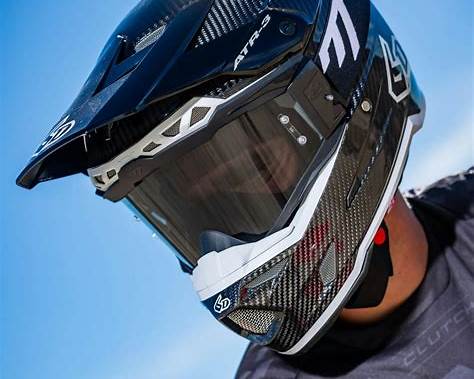
The MAXVIEW lens wraps across much more of the helmet’s eyeport, creating something closer to the panoramic visibility of a helmet shield while retaining the dust protection and tear-off/roll-off functionality expected from proper off-road goggles. 6D offers clear, rose, mirror blue and dark smoke options, all with UVA and UVB protection.
For Middle Eastern riders, the Dark Smoke lens with its 18% visible light transmission could be particularly relevant during bright daytime riding, while the Mirror Blue sits at 43% VLT for riders wanting something less aggressive.
Because if there is one thing we are not short of in this part of the world, it’s sunlight.
FLOAT Fit Is Where Things Get Really Different
The larger lens is impressive, but the more interesting engineering happens behind it.
6D calls the system FLOAT Fit.
Traditional goggles rely heavily on foam pressing against the rider’s brow and cheeks to hold everything in place and maintain a seal.
The MAX takes a different approach.
Its structure integrates with the helmet eyeport, allowing much of the goggle’s load to be supported by the helmet rather than your face. Only the nose interface maintains the conventional lower contact needed to create the seal.
The idea is to reduce facial pressure while opening up airflow around the brow.
Anyone who has spent several hours riding off-road will understand why that matters.
Now add Middle Eastern conditions.
Fine desert dust outside.
Sweat inside.
Temperatures that make you question several of your previous life decisions.
Suddenly, reducing the amount of foam pressed against your forehead sounds considerably less like marketing and considerably more like something we’d like to test.
6D also uses a full-perimeter secondary dust seal and an interchangeable nose interface, with different configurations allowing riders to balance fit, sealing and airflow.
That fine-particle sealing could prove particularly important here. Gulf desert sand has an impressive talent for finding gaps in riding equipment that you didn’t know existed.
You discover most of them later in the shower.
MAX R or MAX X?
There are two versions of the system.
The MAX R is the more competition-focused version, aimed primarily at motocross and faster riding where maximum ventilation isn’t necessarily required.
The MAX X takes the same concept and adds cam-operated ventilation levers, allowing the rider to slightly lift the goggle away from the helmet and increase airflow during slower, more technical riding.
Think enduro rather than motocross.
Or, from a regional perspective, exactly the type of riding where you’re picking your way through technical terrain at low speed with very little natural airflow and your body temperature steadily heading toward shawarma-oven territory.
The MAX X is also part of 6D’s new ATR-3X adventure/off-road helmet package, where the helmet and goggle have effectively been developed as one integrated system.
That pairing is arguably where the MAX concept makes the most sense.
But There’s a Catch
And it’s an important one.
You can’t simply buy a MAX and expect it to work properly with whatever helmet is already sitting in your garage.
Unlike conventional goggles, the MAX is engineered specifically around compatible 6D helmets, including the ATR-3 and ATR-3X motorcycle helmets and ATB-3 downhill/BMX platform. The goggles are even sized according to the helmet shell size.
That’s simultaneously the system’s biggest strength and biggest limitation.
The MAX works differently precisely because 6D controls both sides of the equation: helmet and goggle.
But it also means riders already invested in another helmet brand aren’t simply adding a MAX to their gear bag.
You’re buying into an ecosystem.
Whether riders consider that clever integration or slightly too much commitment will depend on how well the system performs in the real world.
Built for Proper Off-Road Abuse
The rest of the specifications are reassuringly serious.
The MAX uses a shatter-resistant polycarbonate lens, a 44mm silicone-backed strap, dual-density molded foam, interchangeable nose interfaces and compatibility with both tear-off and roll-off systems.
6D says the goggle meets or exceeds EN 1938 requirements and also cited ANSI Z87.1-2010 impact and optical testing in its launch material.
There is also something refreshing about the philosophy here.
6D didn’t begin with:
“How can we make another motocross goggle?”
It appears to have started with:
“Why does the goggle need to sit on the rider’s face in the first place?”
Whether its answer turns out to be better remains to be seen.
But that’s the kind of question that occasionally moves motorcycle equipment forward.
Why It Could Make Sense in the Middle East
The Gulf may actually be one of the toughest environments in which to evaluate the MAX properly.
Off-road riders here aren’t only dealing with impact protection.
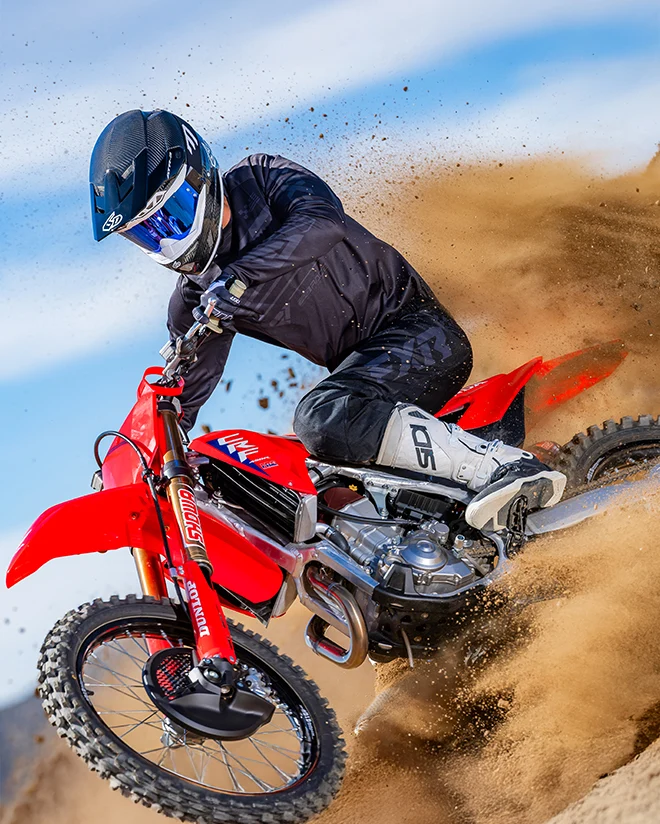
They’re managing heat, glare, sweat, fine dust and prolonged exposure to extremely bright conditions, often during rides that mix fast open sections with slower technical terrain.
That combination attacks almost every weakness of a conventional goggle.
A wider field of view is useful.
Better airflow is useful.
Reducing foam pressure and sweat buildup is useful.
And keeping fine sand away from your eyes is very useful.
The MAX X’s ability to temporarily increase ventilation is especially interesting for desert and enduro riders, where speeds can change dramatically during the same ride.
Open desert at speed? Plenty of airflow.
Stuck working the bike through a slow technical section?
Different story entirely.
And You Can Actually Get 6D in Dubai
There’s another bit of good news for UAE riders: 6D isn’t one of those brands you have to admire online and then figure out how to import yourself.
6D helmets and riding gear are available locally through Palm MX in Al Quoz, Dubai, giving riders the chance to check sizing, fit and compatibility in person rather than gambling on an overseas order. Palm MX already carries 6D’s ATR helmet range, including the ATR-3 — particularly relevant here because the MAX system is designed around compatible 6D helmets.
For anyone interested specifically in the new MAX goggles, we’d recommend checking current availability with Palm MX before making the drive.
And with the kind of desert riding available practically on Dubai’s doorstep, we suspect the MAX won’t have to wait very long for a proper UAE dust test.
The BN Verdict
We’re intrigued.
Not because the MAX has a giant lens — plenty of companies can make a big piece of polycarbonate.
It’s the helmet-supported architecture that makes this interesting.
6D has effectively stopped treating the helmet and goggle as two unrelated products and started designing them as one system.
That is a much bigger idea.
For UAE riders, the real test isn’t going to happen under fluorescent lights inside a showroom.
We want one covered in sand.
We want it after three hours of riding.
We want to know whether the dust seal still works when everything is sweaty, whether that huge lens stays clear, whether the FLOAT Fit actually reduces pressure and whether the MAX X ventilation levers are genuinely useful when speeds drop.
And most importantly:
Can it survive UAE desert dust without us finding sand behind our ears two days later?
Because that might deserve its own international certification standard.
For now, the MAX looks like one of the more genuinely different pieces of off-road riding equipment we’ve seen this year.
But there’s an obvious next step.
6D, send Bike Nation a helmet and MAX X.
We know a desert.
Bike Nation Quick Take
What we like: Huge field of view, helmet-integrated design, serious attention to dust sealing and ventilation.
What we’re watching: Real-world comfort, fogging and dust performance in Middle Eastern conditions.
Biggest limitation: Compatibility is centred around 6D’s own helmet ecosystem.
Best regional fit: Desert, enduro and adventure riders who regularly ride long hours in heat and dusty terrain.
BN curiosity level: Very high.
Preferably tested somewhere sandy.
Which, fortunately, shouldn’t be difficult around here.
Source & Credits: Article based on information from 6D Helmets’ official MAX Goggle press release and product materials, with additional reference from Motorcycle.com. UAE availability referenced via Palm MX / MXOnline Dubai. Images courtesy of 6D Helmets where supplied for editorial use; additional photography credited individually to the respective photographers and platforms.